Short-Story Source Tags & Codes: Mechanical Servants LLC
On how a weird story took shape, what and where it borrowed from, and what it taught me about narrative
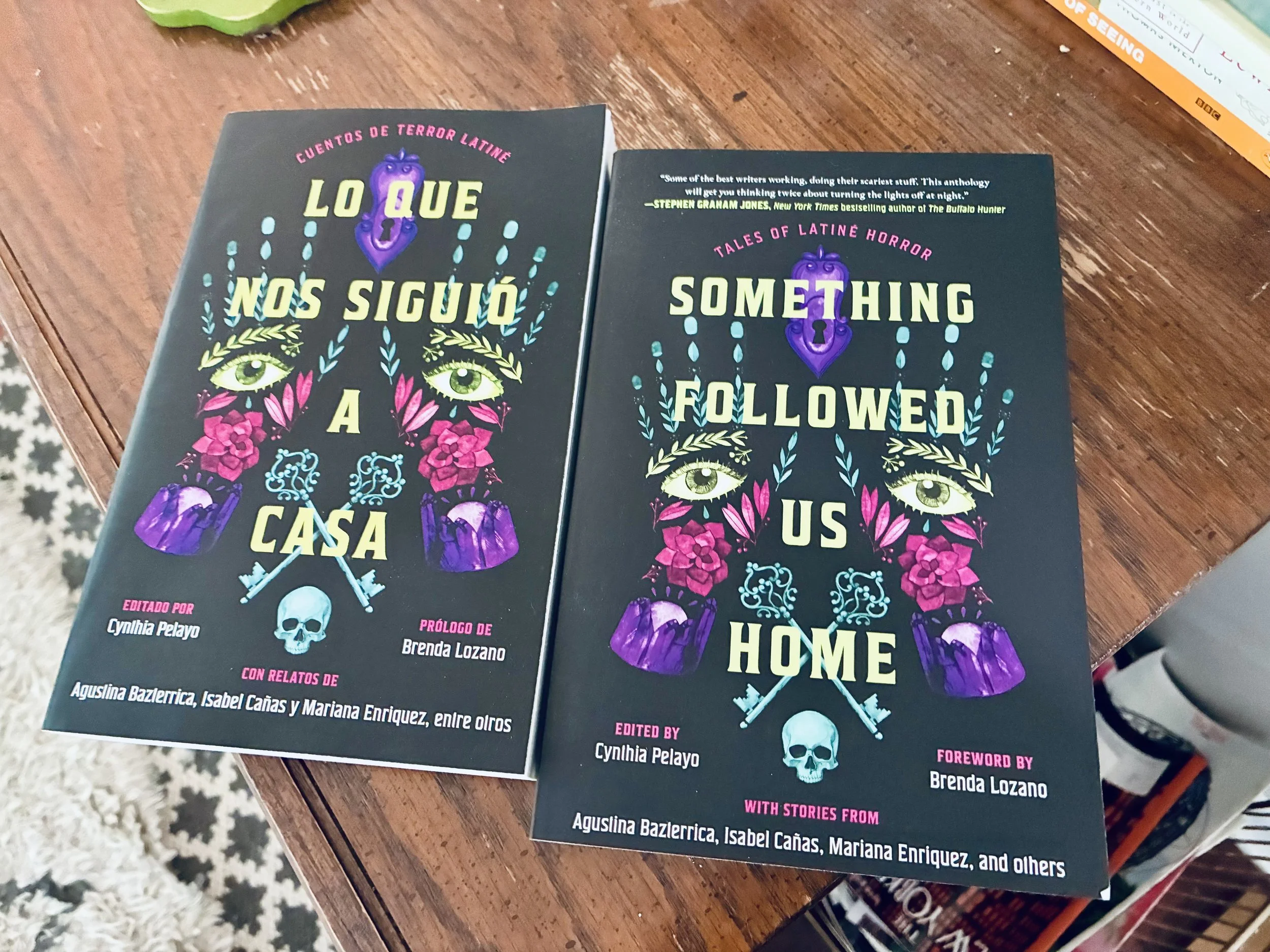
Tonight—Thursday, October 1st at 7pm, in one of the world’s loveliest bookstores—is the Chicago launch of Something Followed Us Home: Tales of Latiné Horror. Please Join me and Ananda Lina and Cynthia Pelayo over at Exile in Bookville; we’ll read, we’ll talk ghosts and hauntings and fiction.
Below are some stray thoughts on “Mechanical Servants LLC,” the story I contributed to the anthology, if you’re at all curious: just a bunch of fun behind-the-scenes bonus footage1, which can be useful if you happen to be working on a story yourself or if you, like me, like to be snoopy.
Means & Methods 1: Genre Expectations + Life
I’ve been thinking about “Mechanical Servants LLC” for years: it’s a ghost story, kind of, and it’s very much a weird story (in every sense, but mostly in that it fits into the genre of the Weird, or the New Weird). And I’ve been progressively more OK with embracing the categories that a piece I’ve written may fit into. I still remember John Barth being asked about any potential discomfort about his stuff being called postmodernist, and he said he was fine with it, his answer being that you needed “common words to talk about anything.” Which I totally love.
And thinking of any work in terms of genre gives you at least the potential shape of a narrative, particularly when all you have is images and ideas.
And that’s all I had! For a long time!
All I had was a memory of being super hungover as an international-student undergrad and grabbing some Tylenol from a vending machine, and the Tylenol came from a real company called “Mechanical Servants” and the package insisted that the Tylenol it came with a cup, but it was this teeny tiny package. I had no idea how you fit a cup in there. And of course you couldn’t. What you could fit in there was a teeny-tiny envelope, and you could say it was a cup.

And so that stayed with me a long time, as did the sense—now that I’m middle-aged—that I lucked out into an amazing life even though I had no plan other than not be living in Colombia. I could remain in the States as long as I stayed in college, so that’s how I ended up getting a PhD, and that’s how I eventually ended up as a professor.
But there was this other self I imagined, another Colombian international student who just keeps getting degrees so he can remain in the US, which felt precarious way back then and feels even more so right now. So the story, like many of the stories I’ve written recently, lean heavily into autofiction—or at least into allowing more of my own life into the fabric of the story than not.
And so those were the shapeless, inchoate seeds of the piece: the vending machine cup-that’s-really-an-envelope, the evocative name of the actual, real-life company, bits and pieces of my own life, and the narrative expectations of autofiction and the weird.
Means & Methods 2: Constraints
This story is part of a cycle, and every single one of the stories has the same set of rules: (1) center a Chicago neighborhood, (2) feature someone whose immigration status is uncertain or in flux, and (3) prominently an app or a website I myself am a little (or a lot) obsessed with.
There is a logic to these rules, but the logic emerged organically, after I found myself navigating these competing demands. There is now a full collection and practically every story mostly abides by those constraints.
You can write a short story about anything, obviously. Keeping some kind of boundary around the possibilities has made these stories the weirdo beasts they turned into
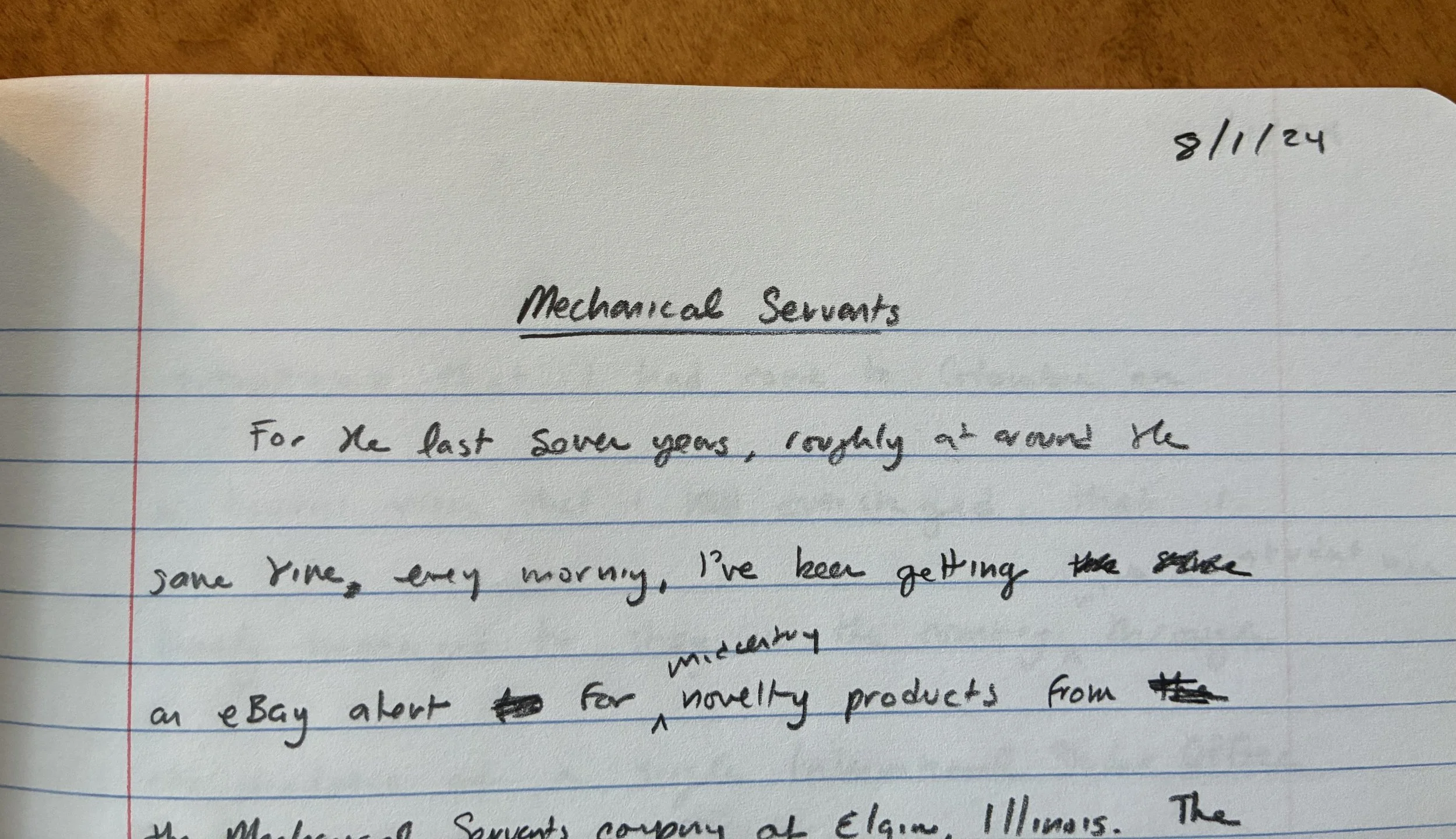
Here’s the beginning of the draft once I had a sense of the shape—genre, predicament, etc.
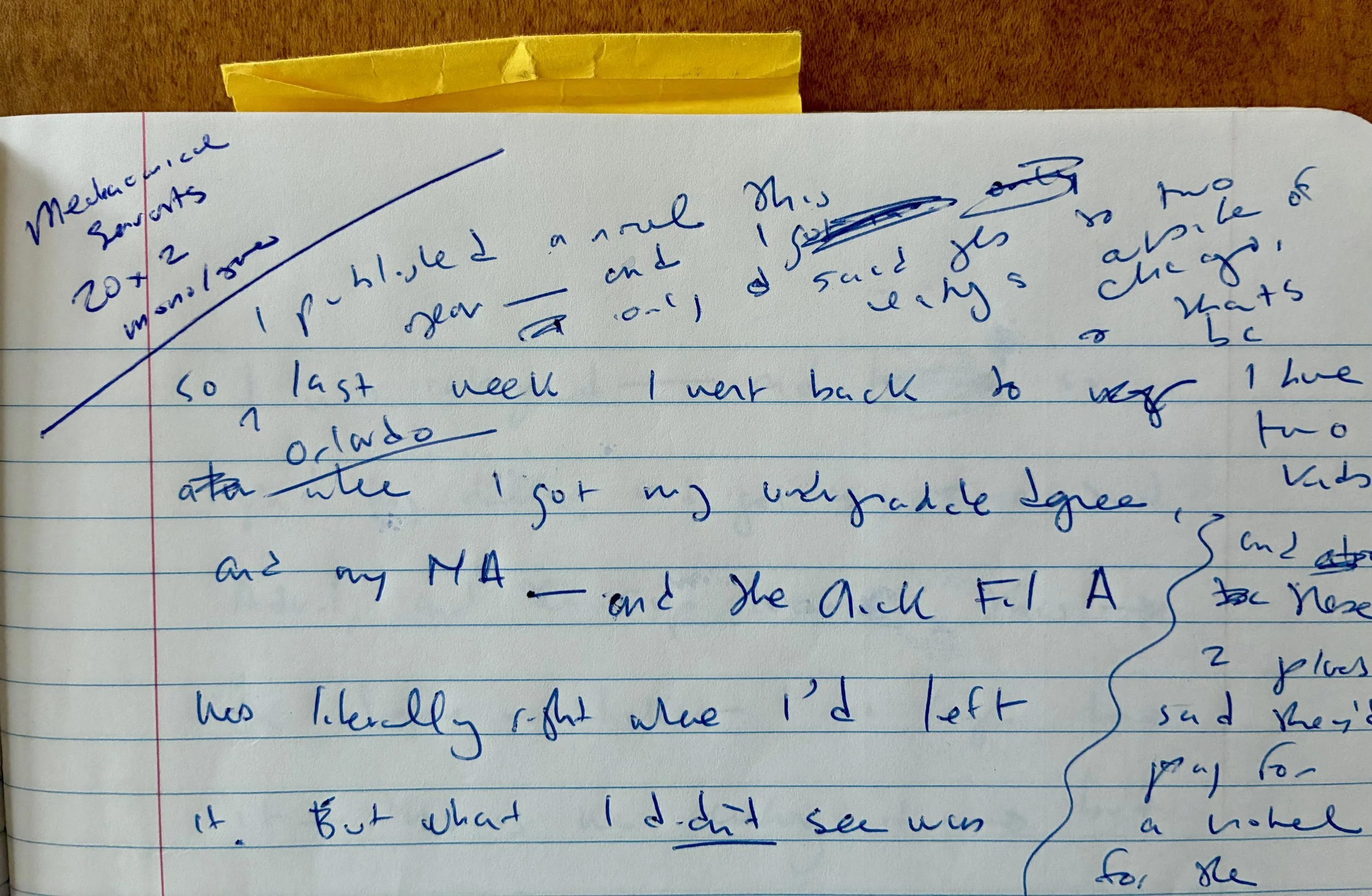
Here it is when it was just me remembering everything I could about that initial moment, and it was mostly about the campus Chick Fil-A.
Means & Methods 3: Other People’s Ghosts
I am a reader first. I’ll always be a reader. I love to write, but I don’t know what I would do without other people’s stories, and I’m a huge believer in the power of leaning into other people’s work.
This particular story owes a lot to Stephanie Feldman’s remarkable recent stories, particularly “The Staircase” (you’ll find it collected in The Night Parade) which clarified a lot about seemingly ordinary places that appear and reappear and then exist somewhere else. (The ur-version of that kind of thing, for me, is Madeline Yale Wynne’s “The Little Room” btw.)
It also basically steals this delightful rug-pull thing the incredible John Kessel does in his last two ghost stories, “Spirit Level” in particular, which I won’t spoil either for mine or his. But I saw what he did and I was like, OK, I love this, I’m going to do this too.
And submerged, or submerged-ish, in “Mechanical Servants LLC,” is Robertson Davies’s delightful “The Ghost Who Vanished by Degrees,” a cozy academic perpetual grad-student story that you can find in High Spirits, and may trigger some serious trauma if you ever had to write a dissertation or do an oral defense or found yourself in a university library for way too many hours.
Follow Us Home
Here it is when it was just me remembering everything I could about that initial moment, and it was mostly about the campus Chick Fil-A.
That’s it! Those are all the bits that went into the story, plus the ordinary brute work of drafting and fabulating and revising and getting it in shape.
Come say hi to me & Cynthia & Ananda & our ghosts tonight, OK? I’m so proud to be in there, and so happy to be in such excellent company. Latinx folk are, like, 30% of the US population. We barely top 5% of publishing. This is the first all-latinx, all-horror anthology from a Big 5 press, and it’s a big deal, and I’d love for this book to be as big as it can be. The stories in there are fabulous, and strange, and they’ll make your world fabulous and strange too, and I’ll be so happy to keep on talking ghosts with you tonight.
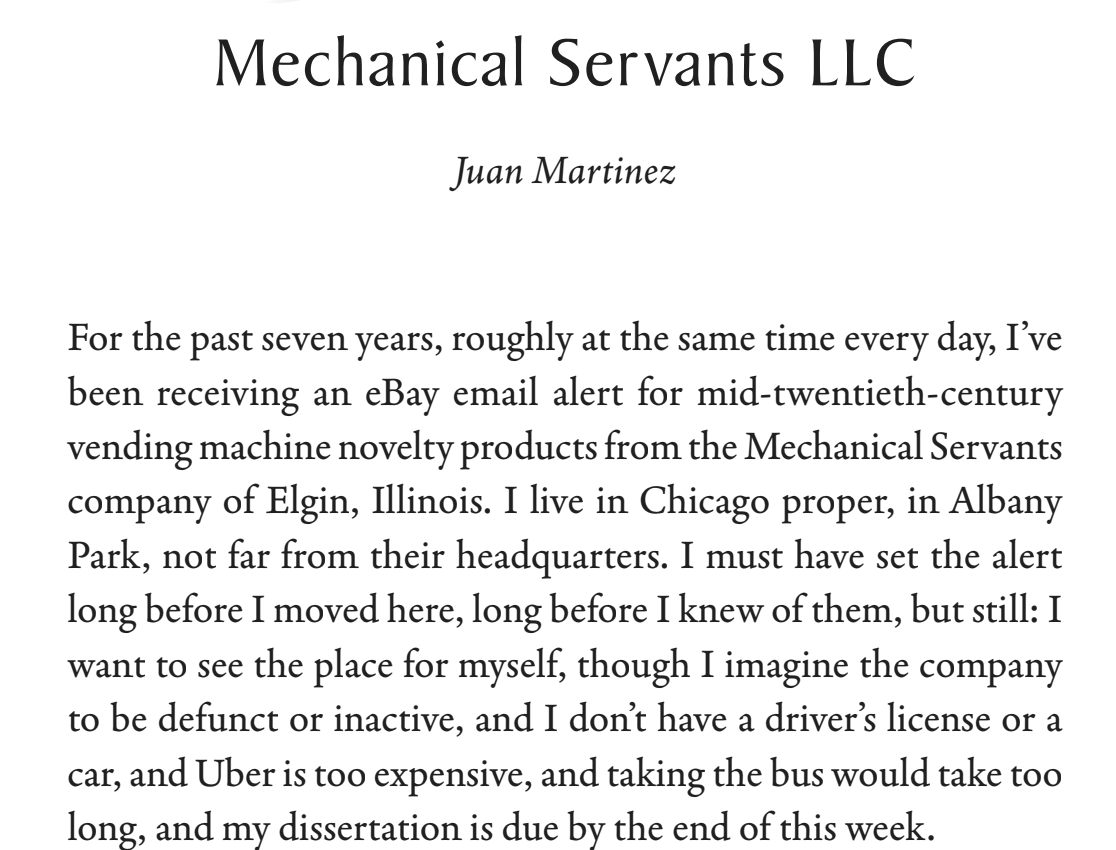
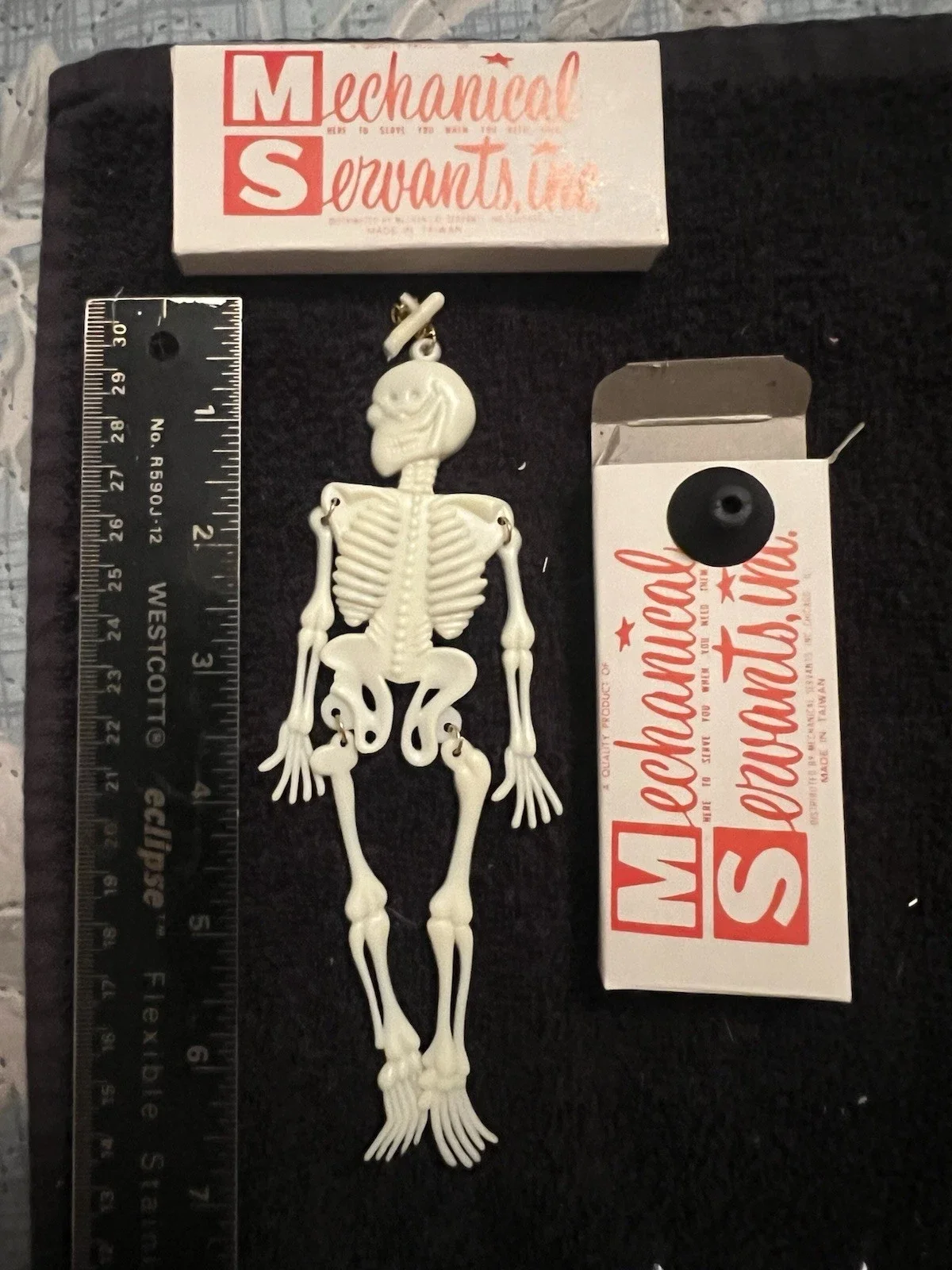
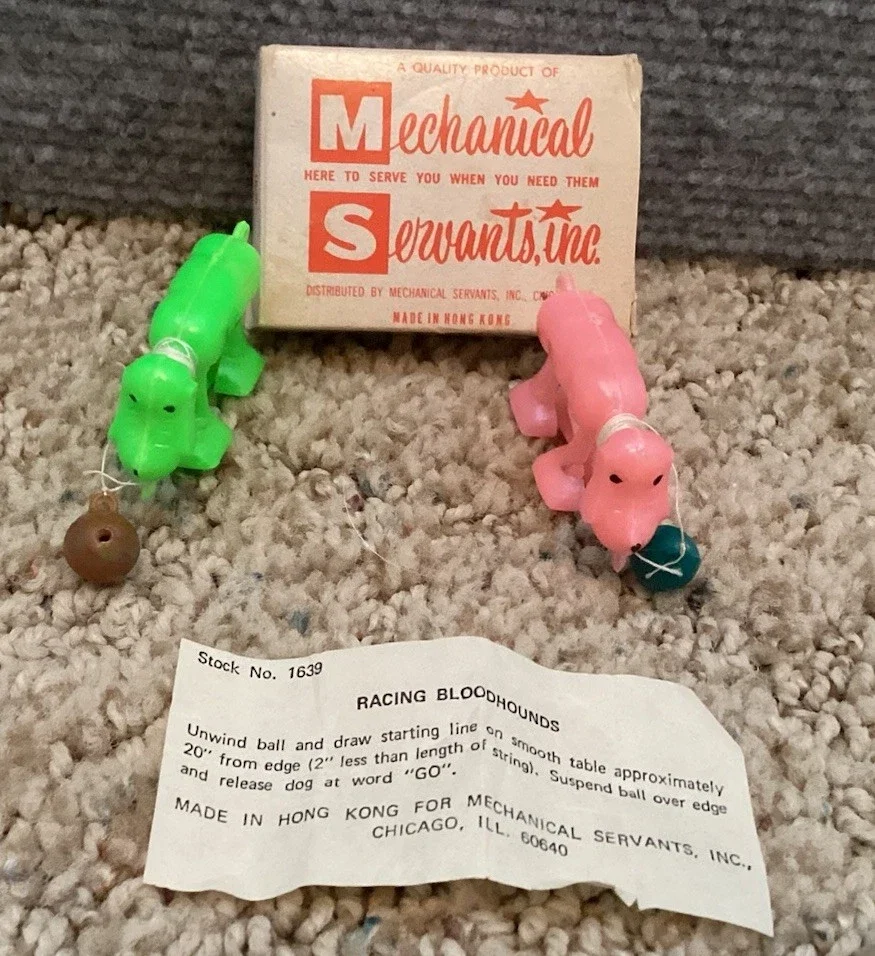
Here’s the first paragraph of the story, followed by some actual Mechanical Servants products lifted off eBay.
My all-time favorite behind-the-scenes featurette btw, comes from Renny Harlin’s smart-shark movie Deep Blue Sea, where after spending some time pondering the mechanics of shooting the movie and working with LL Cool J and Samuel L Jackson and CGI fish he stops and says, basically, “You know, ultimately what I really wanted to do was—” and there’s this long pause, so prime you for the insight ahead, and then he finishes: “What I wanted to do was do a movie about really smart sharks.” Which he totally did.